
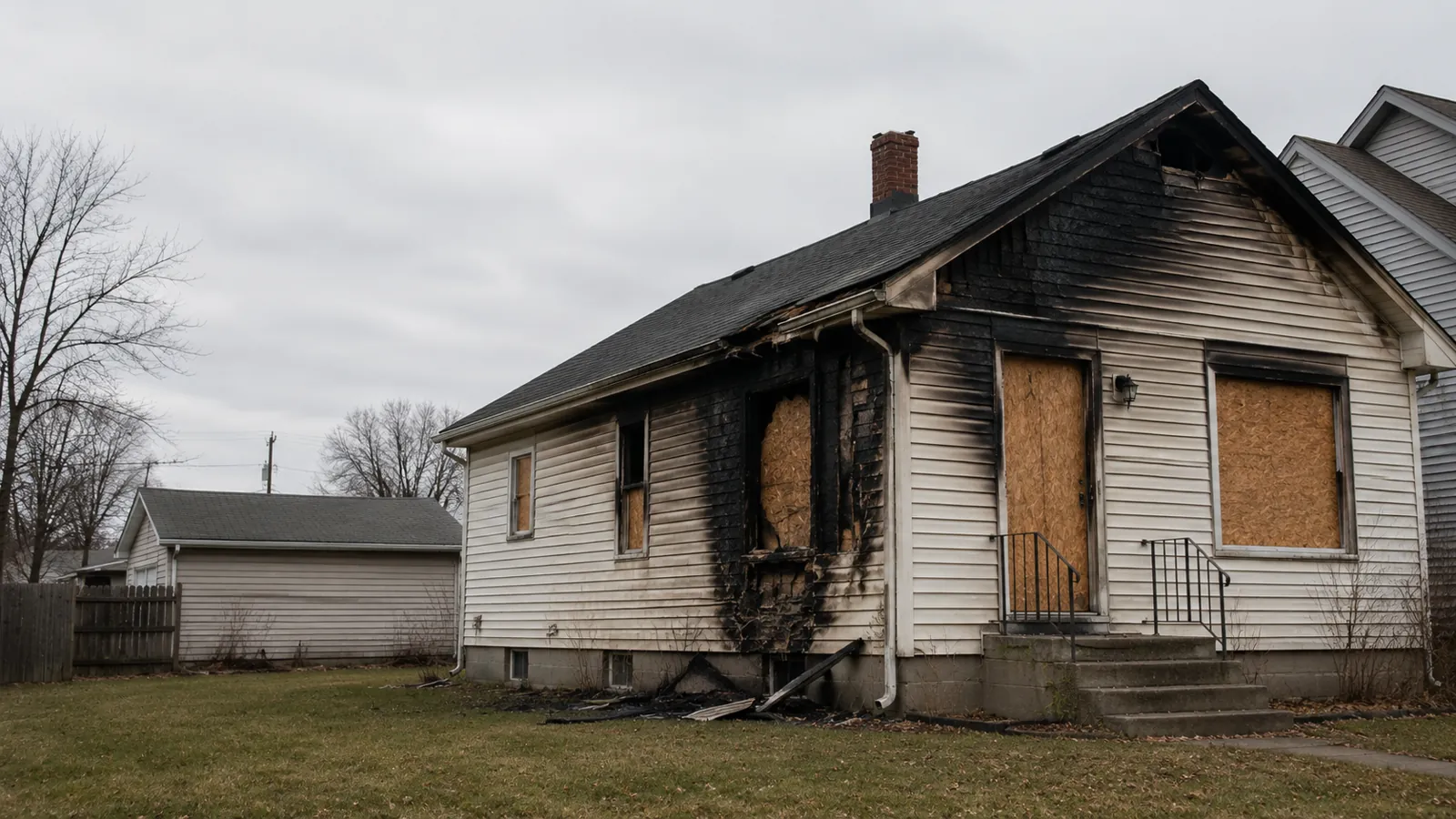
A good property decision begins with the correct order of questions. Use this guide to organize the facts, then obtain professional advice where the situation requires it.
Start with safety and access
Follow fire-department, municipal, insurance, and utility instructions before entering or allowing access to a damaged structure.
Gather the insurance record
Collect the claim number, adjuster information, reports, estimates, photographs, payments, open coverage questions, and any repair or demolition orders.
Clarify what transfers
Before a sale, determine how insurance proceeds, debris, personal property, code obligations, liens, and title issues will be handled in writing.
Separate safety, insurance and the sale decision
A fire-damaged building can contain structural, electrical, chemical, and air-quality hazards. Follow the responsible authorities and qualified professionals before entering. Do not send visitors or contractors into areas whose safety has not been assessed. Arrange secure access and ask who may authorize visits.
Insurance questions belong with the insurer and qualified advisors. Keep claim communications, photographs, estimates, inspection reports, and payments organized. Do not assume a property sale automatically transfers an insurance claim or lets you retain particular proceeds. Clarify those issues before negotiating around them.
Compare repair scopes consistently
A surface cleanup estimate may not include structural repair, smoke remediation, contents removal, electrical replacement, permits, or work required by local authorities. Ask each estimator what is included and excluded. Identify the assumptions behind the scope rather than comparing only the totals.
For example, one proposal may repair damaged rooms while another assumes significant demolition. Their prices cannot be compared as though they solve the same problem. Ask about inspection access, hidden damage, and how changes would be documented. An as-is purchaser may price the uncertainty differently than a homeowner completing an insurance repair.
Write down the transfer responsibilities
List debris, personal belongings, utilities, open insurance questions, recorded liens, and any known official orders. Determine with the professionals involved which obligations affect the property and what needs to occur before closing. Ask for written treatment of cleanup, access, and possession.
If repair is not practical for your budget or timeline, an as-is review may be worth exploring. Provide current photographs only when it is safe to obtain them. Explain which reports are available and what is still pending. A realistic review starts with the actual damage rather than a promise that every damaged house can close immediately.
An owner receives repair estimates after a fire — a worked planning example
One estimate addresses interior finishes and another includes structural work and smoke-related cleanup. Insurance questions remain open and the house has restricted access.
A practical sequence: Follow safety directions before arranging entry. Ask each estimator to clarify scope and exclusions. Organize claim communications and consult the appropriate professionals about proceeds and transfer questions. Give potential buyers the current reports and explain the unresolved issues.
The decision principle: Two estimates cannot be compared until their work is comparable. A realistic sale discussion identifies both known damage and uncertainty instead of treating the lowest repair quote as the complete cost.
This is a hypothetical planning example, not a description of a LifeTree client or a prediction of your result. To adapt it, write down which facts match your property and which do not. Replace assumptions with your own documents, quotes, dates and professional guidance. If the available information changes, update the comparison instead of treating the original plan as fixed. The value of a scenario is the questions it exposes, not a promised price or timeline.
What should I tell prospective purchasers about access?
State the actual safety restrictions and the professionals or authorities involved. Identify which areas have been assessed and which remain inaccessible. Follow qualified instructions about structural, electrical and air-quality concerns. A person interested in buying is not automatically qualified to decide a damaged building is safe.
Coordinate visits through a responsible contact and keep the access instructions documented. If available, provide reports through a secure, appropriate process. Do not enter to obtain marketing photographs when safety has not been established. The property can be discussed using the information available while necessary assessments continue.
How do I organize insurance questions?
Create a claim file with the insurer, claim number, adjuster contacts, communications, reports, estimates, payments and unresolved questions. Keep repair invoices separate from preliminary estimates. Ask the insurer and appropriate advisors what obligations or limitations affect repair, payments or a proposed transfer.
Do not rely on a purchaser’s assumptions about coverage or the treatment of proceeds. The insurance arrangement and property sale need coordinated review. If an agreement mentions a claim or payment, have qualified professionals explain it. A clear record helps you avoid making conflicting commitments to the insurer, contractors and buyer.
Could demolition be part of the plan?
That question requires property-specific professional and local authority review. Ask about the condition, applicable orders, permits, utilities, debris handling, cost and effect on the land’s future use. Do not assume a low demolition quote includes every related task or that a structure can simply be removed without a defined process.
Compare demolition with repair and a current-condition sale using clear scopes and assumptions. Determine who would carry out and pay for work under any proposed arrangement. If a buyer intends demolition, the seller still needs to understand the written transfer responsibilities. The intended future project should not obscure what happens before closing.
What information supports an initial as-is review?
Share the address, general damage description, occupancy, safe access, available reports and desired timing. Identify insurance and authority questions as pending where they are not resolved. Explain whether contents remain and whether there are known liens, utilities or official orders to review.
Ask the prospective purchaser what further information is necessary and how they plan to evaluate the property. A proposal may reflect both the known repair scope and uncertainty. Compare it with a properly scoped repair plan, not a quote for only cosmetic work. Any price or schedule should remain connected to the facts and conditions in the agreement.
What should I avoid assuming?
Avoid assuming a quote covers all damage, a policy will pay a particular amount, a buyer accepts every remaining item, or an advertised closing date is feasible before title and safety review. Write those assumptions as questions and assign them to the appropriate professional. Clear uncertainty is more useful than confident guesses when damage and insurance intersect.
Your next-step worksheet
Use a single page to keep the decision manageable. Write the property address or parcel number, the people who need to participate, your preferred outcome, and the date you want to review progress. Next to each open question, name the person or professional who will answer it. Keep confirmed information separate from assumptions.
Turn the sections above into actions: start with safety and access; gather the insurance record; clarify what transfers; separate safety, insurance and the sale decision; compare repair scopes consistently; write down the transfer responsibilities. Add the document or evidence needed for each action and a realistic completion date. If you are comparing providers, give them the same property facts so their proposals can be understood on comparable terms.
Before committing, summarize the proposed price or cost, conditions, timeline, possession arrangements, responsibilities, and unanswered questions in your own words. If you cannot explain a significant term, ask for clarification or professional review. Keep the written agreement, verified contact details and final records together. A useful worksheet does not make the decision for you; it helps ensure the decision follows evidence and your actual priorities.
Connect this guide with your next decision
Compare the net result of a direct sale and a listing, review selling in current condition, and organize your next steps with the seller resource center. Buyers can review first-time purchase planning or off-market due diligence.
This guide is general educational information, not legal, tax, financial, housing-counseling, or investment advice.