A good property decision begins with the correct order of questions. Use this guide to organize the facts, then obtain professional advice where the situation requires it.
Protect the meaningful items
Begin with documents, photographs, valuables, medication, family keepsakes, and anything another person has a right to claim.
Choose the cleanup level
Compare full cleanout, partial sorting, professional help, donation, disposal, or discussing what may remain with an as-is buyer.
Photograph the condition honestly
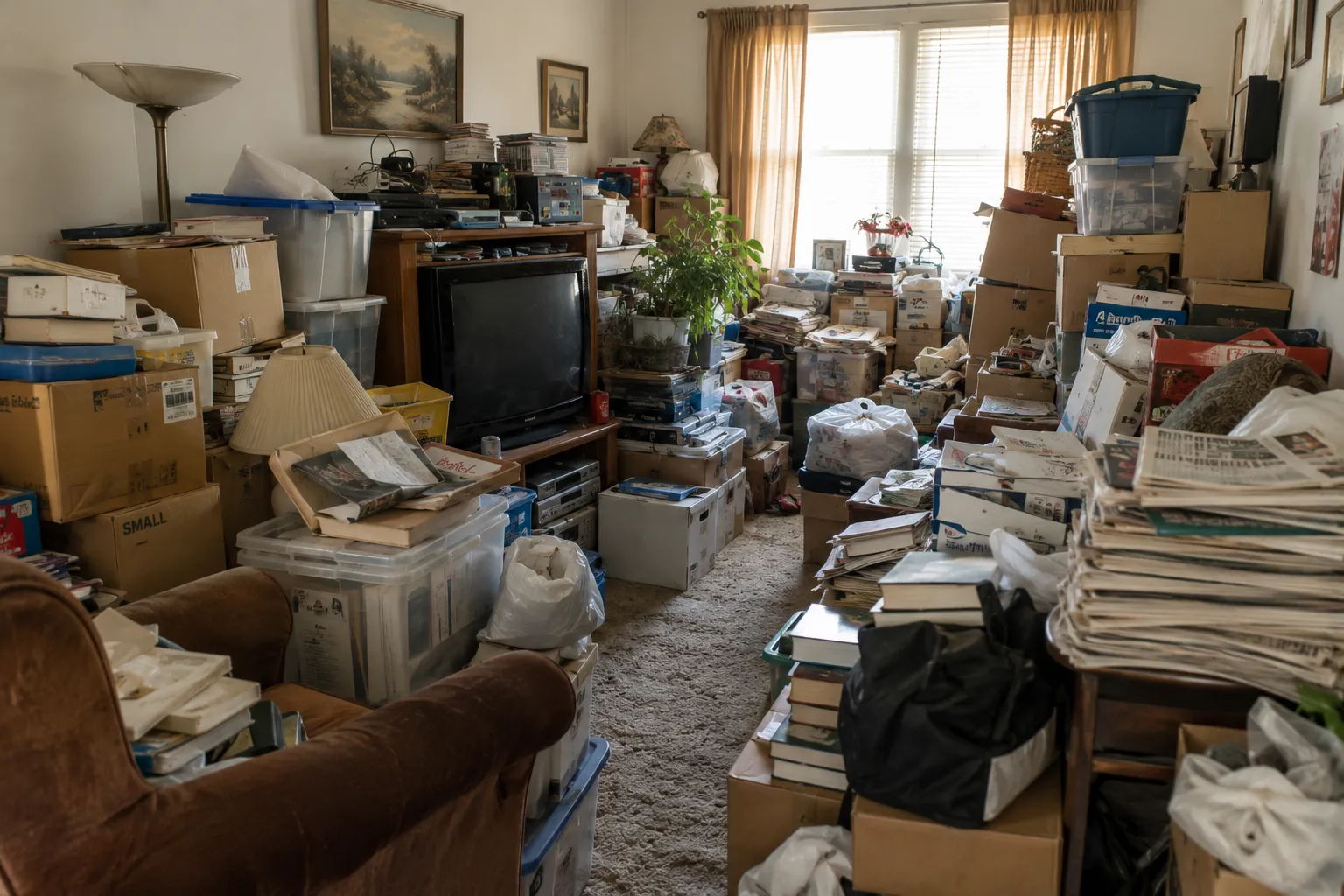
Clear photographs and a simple inventory help remote family members and potential buyers understand access, volume, and any property damage.
Use a sorting system that protects people and privacy
Create clearly labeled categories for keep, family review, donation, disposal, and items belonging to someone else. Begin with identity records, financial papers, medication, valuables, and meaningful photographs. Shred sensitive documents appropriately instead of putting them into ordinary visible rubbish.
If family members are helping, give them written boundaries. One person’s unwanted box may contain another person’s keepsakes. A short review window and a designated contact can prevent conflict. Keep a separate inventory for major items rather than trying to catalog every object before making any progress.
Decide how much cleanup the sale path actually requires
A traditional listing may benefit from clearer rooms and easier access, while an as-is purchaser may be able to review a property with belongings remaining. Ask what is necessary for a safe inspection and what can be negotiated. Do not assume either route requires a perfect interior.
Compare your own labor, hired cleanout help, storage costs, donation arrangements, and disposal fees. A cleanout quote should say which areas are included, which materials need specialist handling, and whether work includes cleaning after removal. Heavy clutter may hide property damage, so describe known issues separately from the belongings.
Agree on what stays and verify the final condition
If items will remain after a sale, identify them in the written transaction terms. Clarify whether the purchaser accepts furniture, appliances, rubbish, or other materials and whether any items are excluded. Do not leave hazardous materials or third-party property based on an informal assumption.
Photograph important items removed and the agreed condition of the house. Keep keys, access codes, and the possession date with the handover records. A clear agreement can reduce the emotional and physical burden of sorting without creating uncertainty for the next owner.
A family has limited time to clear a full house — a worked planning example
The rooms contain decades of possessions and several family members want to review keepsakes. A proposed sale date would not allow a complete cleanout without hired help.
A practical sequence: Protect documents and valuables first, set a reasonable family review process, and ask cleanout providers for clear scopes. Ask any prospective as-is purchaser what may remain and document exclusions. Compare the net outcome of a full cleanout with a negotiated partial approach.
The decision principle: A workable agreement may reduce labor, but it must clearly describe items remaining and responsibilities. Nobody should assume that everything left behind is accepted or that every object belongs to the seller.
This is a hypothetical planning example, not a description of a LifeTree client or a prediction of your result. To adapt it, write down which facts match your property and which do not. Replace assumptions with your own documents, quotes, dates and professional guidance. If the available information changes, update the comparison instead of treating the original plan as fixed. The value of a scenario is the questions it exposes, not a promised price or timeline.
How do we begin when the project feels overwhelming?
Choose a small, safe starting area and a limited task. Protect documents and valuables first, then use consistent categories so every helper follows the same approach. Do not try to make every emotional decision during one exhausting day. Give family review a practical structure and designate the person who resolves uncertain items.
Where clutter creates unsafe pathways or other hazards, ask qualified help rather than attempting a risky cleanout. Record the areas still needing attention. A useful first milestone may be safe access and protected keepsakes rather than a completely empty home. Progress is easier when the goal fits the actual sale path.
How should professional cleanout quotes be compared?
Ask each provider to identify rooms, outbuildings, heavy items, sorting, transport, disposal, hazardous-material exclusions and final cleaning. Clarify whether donation services are included and whether there are disposal charges beyond the headline amount. Ask about scheduling, insurance and access arrangements appropriate to the work.
Show providers the actual volume and condition where safe. A quote based on a few selected photographs may change after a visit. Compare equivalent scopes instead of choosing the smallest number. If you want keepsakes separated rather than everything removed, make that requirement explicit and keep excluded items labeled.
Can a buyer accept the house with contents?
Some purchasers may consider that arrangement, but each proposal is individual. Ask which items and materials may remain, which must be removed, and how responsibility is documented. Contents accepted as part of a sale are different from property someone else owns or materials needing special handling.
If the convenience matters to your choice, ensure the terms reflect it. Ask whether an inspection or final walkthrough can change the arrangement and how discrepancies are handled. Compare any cost or price adjustment with outside cleanout proposals. Do not rely on the phrase as-is to answer every contents question.
What should remain in my records after the sale?
Keep the written agreement, list of included and excluded items, photographs where useful, invoices for work performed and possession arrangements. Document the removal of sensitive papers and valuable keepsakes. Maintain verified contacts for the purchaser and closing provider.
If family members or helpers participated, retain the decisions relevant to items that might otherwise be disputed. You do not need a photograph of every object, but important exclusions and arrangements should be understandable. A clear record can protect the sense of completion after an emotionally demanding property transition.
How do I control storage costs?
Store items for a defined reason and review date. A storage unit can help a move, but an indefinite pile of unsorted possessions creates another recurring expense. Ask whether family pickup, donation or documented disposal would better fit the belongings plan. Protect keepsakes without moving the entire unresolved cleanout into a new location.
Your next-step worksheet
Use a single page to keep the decision manageable. Write the property address or parcel number, the people who need to participate, your preferred outcome, and the date you want to review progress. Next to each open question, name the person or professional who will answer it. Keep confirmed information separate from assumptions.
Turn the sections above into actions: protect the meaningful items; choose the cleanup level; photograph the condition honestly; use a sorting system that protects people and privacy; decide how much cleanup the sale path actually requires; agree on what stays and verify the final condition. Add the document or evidence needed for each action and a realistic completion date. If you are comparing providers, give them the same property facts so their proposals can be understood on comparable terms.
Before committing, summarize the proposed price or cost, conditions, timeline, possession arrangements, responsibilities, and unanswered questions in your own words. If you cannot explain a significant term, ask for clarification or professional review. Keep the written agreement, verified contact details and final records together. A useful worksheet does not make the decision for you; it helps ensure the decision follows evidence and your actual priorities.
Connect this guide with your next decision
Compare the net result of a direct sale and a listing, review selling in current condition, and organize your next steps with the seller resource center. Buyers can review first-time purchase planning or off-market due diligence.
This guide is general educational information, not legal, tax, financial, housing-counseling, or investment advice.